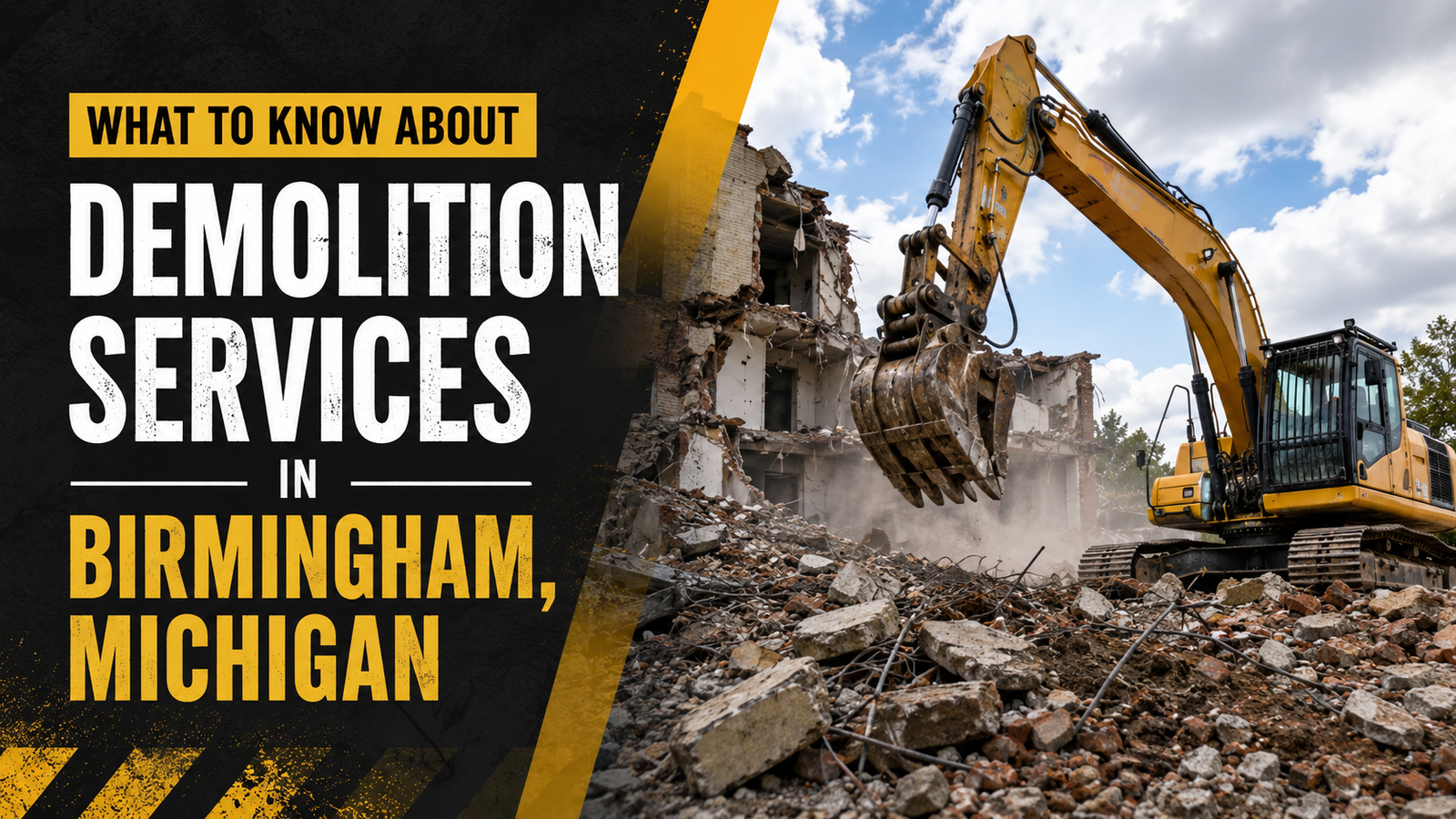
Birmingham, Michigan is known for its tree-lined streets, historic downtown, and a housing stock that ranges from charming 1920s bungalows to newly built custom homes. Because so much of the city’s appeal comes from its established character, property owners who are planning a renovation, teardown-rebuild, or storm damage repair often have questions about how the demolition process actually works. This guide walks through what demolition involves, how contractors approach a job safely, and what residents in Birmingham should generally expect before ground is broken on a project.
Understanding the Role of a Demolition Contractor
A Demolition Contractor Birmingham is a specialized tradesperson who plans and executes the safe removal of structures, whether that means an entire home, an aging garage, an interior build-out, or a section of concrete driveway. Unlike general contractors, demolition specialists focus specifically on structural teardown, debris management, and site preparation, which requires familiarity with local building codes, utility systems, and environmental regulations. In a city like Birmingham, where many structures date back several decades, this expertise becomes especially important because older buildings can contain materials or construction methods that are no longer used today.
Types of Demolition Projects in Birmingham
Demolition work generally falls into a few broad categories. Full residential demolition involves removing an entire home down to the foundation, which is common in Birmingham given the number of lot-value teardowns that make way for new custom construction. Partial demolition might involve removing a single room, an addition, or an outdated kitchen or bathroom as part of a larger renovation. Accessory structure removal covers detached garages, sheds, pool houses, and similar buildings that have reached the end of their usable life. Finally, hardscape removal deals with driveways, patios, and concrete slabs that need to come out before new landscaping or construction can begin.
Each of these project types calls for a different approach, different equipment, and a different level of planning, which is why an initial site walk-through is such an important first step for any contractor taking on the work.
The Demolition Process, Step by Step
Most demolition projects follow a similar sequence regardless of size. It typically begins with a site assessment, where the contractor evaluates the structure’s age, construction materials, and proximity to neighboring properties. Because Birmingham lots can be relatively tight, especially in older neighborhoods near downtown, this assessment often includes a plan for protecting fences, mature trees, and adjacent driveways during the work.
Next comes permitting and utility coordination. Local permitting authorities typically require a demolition permit before any structural work begins, and utility companies need to be contacted to disconnect and cap gas, electric, and water service. Skipping this step is one of the most common causes of project delays, so experienced contractors handle it early.
Before physical demolition starts, older structures are often surveyed for hazardous materials such as asbestos siding, insulation, or old flooring adhesives, which were common in homes built before the 1980s. If any hazardous materials are identified, they must be properly abated by licensed professionals before mechanical demolition can proceed.
Once the site is cleared for work, the contractor moves into the actual teardown phase, using either mechanical equipment for a full structural removal or more selective, hand-based deconstruction methods when portions of a building need to be preserved. Debris is then sorted on-site, separating wood, metal, concrete, and other recyclable materials from general waste. The final step is site grading and cleanup, leaving the lot level and ready for the next phase of construction or landscaping.
Safety Standards on a Demolition Site
Demolition sites carry inherent risks, from falling debris to dust and airborne particulates, which is why safety protocols are central to how reputable contractors operate. Crews typically wear protective equipment, establish clear site perimeters with fencing or barriers, and use dust suppression methods like water misting to keep particulates from affecting neighboring properties. In residential areas like Birmingham, where homes can sit close together, protecting adjacent structures from vibration and debris is treated as seriously as the demolition itself.
Noise management also plays a role, since most municipalities regulate the hours during which demolition equipment can operate. Coordinating with neighbors ahead of time, even informally, tends to make the process smoother for everyone involved.
Environmental Considerations and Material Recycling
Modern demolition puts a strong emphasis on recycling and waste reduction rather than sending everything to a landfill. Concrete and asphalt can often be crushed and reused as fill material or aggregate. Dimensional lumber, doors, cabinetry, and fixtures are sometimes salvaged and donated or resold before demolition begins. Metal components, including pipes, wiring, and structural steel, are typically separated out and recycled through scrap facilities. This approach not only reduces environmental impact but can also lower the overall volume of material that needs to be hauled away.
Factors That Influence Demolition Timelines
Several variables affect how long a demolition project takes. The size and construction type of the structure matters, as does whether hazardous materials are present and need abatement before work can proceed. Permitting timelines vary depending on the local municipality’s current workload. Michigan’s seasonal weather is another factor, since frozen ground in winter months can complicate excavation and site grading work compared to spring or summer scheduling.
Why Birmingham Property Owners Consider Demolition
Given Birmingham’s desirable location within Oakland County, it is common for buyers to purchase older homes primarily for their lot value, with plans to build new construction that better fits modern layouts and energy standards. Other common reasons include storm or fire damage that has compromised a structure’s integrity, aging garages or outbuildings that no longer meet current safety standards, and property owners looking to modernize a lot before a renovation. Regardless of the reason, understanding the process ahead of time helps property owners plan realistically for permitting, timelines, and next steps.
Signs a Structure May Need Demolition Rather Than Repair
Not every aging or damaged structure needs to come down, but there are some common warning signs that suggest demolition may be the more practical path. These include a foundation with significant cracking or settling, extensive water damage that has compromised framing or subflooring, signs of long-term pest damage such as carpenter ant or termite activity in structural members, and roofing failures that have led to prolonged moisture intrusion throughout the building. A qualified inspector or contractor can evaluate a structure against these factors to help determine whether repair is still a realistic option or whether the underlying damage has progressed too far.
In Birmingham specifically, it is also common for a home to be structurally sound but simply outdated relative to current lot values and buyer expectations, which leads some owners to choose demolition purely as a redevelopment strategy rather than because the structure itself is failing.
Preparing a Property Before Demolition Day
There are a few steps property owners can take ahead of time to help a demolition project go smoothly. Removing personal belongings, salvageable fixtures, or landscaping features that are meant to be preserved should happen well before the crew arrives. It also helps to confirm mail forwarding, alarm system cancellation, and any homeowner’s association notifications if the property is part of one, since Birmingham has several neighborhoods with active associations. Clear communication with immediate neighbors about the expected start date and duration of the work can also go a long way toward reducing friction once equipment is on-site.
Common Misconceptions About Demolition
A few misconceptions tend to come up when property owners are new to the demolition process. One is the assumption that demolition can begin the same week a decision is made, when in reality permitting, utility disconnection, and any required hazardous material abatement typically add several weeks to the front end of a project. Another common misconception is that all demolition debris ends up in a landfill, when in practice a significant share of material, particularly concrete and metal, is recycled. Finally, some property owners assume a demolition crew will handle salvage of valuable fixtures automatically; if specific items are meant to be preserved, this should be discussed and confirmed before work begins.
Frequently Asked Questions
Do I need a permit to demolish a structure in Birmingham? In most cases, yes. Local ordinances generally require a demolition permit before any structural teardown begins, along with proof that utilities have been disconnected.
How do I know if my home has asbestos? Homes built before the 1980s are more likely to contain asbestos in materials like siding, insulation, or flooring. A hazardous materials survey conducted before demolition is the most reliable way to identify it.
What happens to the debris after a demolition? Reputable contractors sort debris on-site, recycling concrete, metal, and wood where possible, with the remainder hauled to an appropriate disposal facility.
How long does a typical residential demolition take? A single-family home teardown often takes a few days for the physical demolition itself, though the full project timeline, including permitting and utility disconnection, can extend to several weeks.
Is demolition noisy for neighbors? Yes, demolition equipment does generate noise, which is why most municipalities restrict working hours and why coordinating with neighbors in advance is good practice.
What should I do with landscaping I want to keep? Mark or flag any trees, shrubs, or garden features you want preserved and discuss protective measures with the contractor before the site assessment is finalized.
Homeowners and property managers researching a demolition contractor in Birmingham will find that understanding the process in advance makes the entire project far less stressful, whether the work involves a single garage or a full residential teardown.